The Challenge
The U.S. grid is facing rapid growth in electricity demand from data centers, electric vehicles, and domestic manufacturing. Aging transmission and distribution lines, limited grid capacity, and systems built for one-directional power flows are struggling to keep up with today’s pace of change. Without significant upgrades and smarter management, the mismatch between supply and demand reduces reliability, raises costs, and increases the risk of outages.
How are we making a difference?
The Energy Technologies Area (ETA) at Lawrence Berkeley National Laboratory (LBNL) works across sectors to develop the data, tools, and strategies needed to advance a reliable, modern power grid. Our researchers partner with utilities, regulators, and industry leaders to translate innovative science into practical solutions. ETA helps decision-makers plan smarter investments, manage growing demand, and bring technology to market at scale.
Making smart investments in the grid starts with having the right data and analytical frameworks. ETA researchers develop tools and insights that help utilities, regulators, and policymakers evaluate transmission options, understand market dynamics, and quantify the true costs and benefits of grid infrastructure decisions—enabling a more strategic, evidence-based approach to building a reliable grid for the future.
Reconductoring Economic & Financial Analysis (REFA) Tool
Strategic transmission planning increasingly hinges on knowing when to upgrade existing lines versus build new ones. The REFA tool gives utilities, planners, and regulators a clear, consistent way to compare the costs and benefits of reconductoring with advanced conductors—informing smarter investments in a reliable, resilient grid.
Power System Reliability Tools
Understanding the true cost of power outages is essential to prioritizing grid investments. LBNL's Interruption Cost Estimate (ICE) Calculator and Power Outage Economics Tool (POET) help utilities, regulators, and policymakers quantify the economic impacts of both short- and long-duration outages—guiding billions of dollars toward a more reliable grid.
Interconnection Queues
LBNL has been at the forefront of research on electric generation and storage interconnection queues—the pipelines of proposed electricity infrastructure projects seeking access to the transmission grid. The interconnection process plays a central role in grid planning because it identifies the transmission facilities and upgrades required to integrate new resources and determines how those costs are allocated among project developers. Through extensive analysis of interconnection queue data and practices across the United States, LBNL has produced influential insights that are helping utilities, regulators, system operators, and policymakers improve planning processes and support a more reliable and resilient electric grid.
Retail Electricity Price Research
LBNL is a leader in research on retail electricity prices and the factors that influence customer electricity bills. Using nationwide utility, market, and policy data, researchers identify the key drivers of electricity price changes—including grid infrastructure investments, fuel costs, extreme weather, and demand growth—and provide objective analysis to help policymakers and regulators maintain affordable, reliable, and resilient electric service.
Smart Controls & Operational Tools
A modernized grid depends not just on new infrastructure, but on intelligent systems that can coordinate energy use in real time. ETA develops and demonstrates smart controls and operational tools that enable buildings, industries, and other energy users to respond dynamically to grid needs—reducing waste, cutting costs, and strengthening grid reliability from the demand side.
Load Flexibility
Load flexibility—also called demand flexibility—is the ability of electricity users to shift the timing or amount of their energy use in response to grid conditions, prices, or emergencies. Our researchers develop and demonstrate strategies that help turn buildings, industries, vehicles, and data centers into responsive resources for a more reliable, affordable grid.
Transforming Building Controls
Buildings consume more energy when their controls don't work as intended—and faulty building automation systems waste an estimated $17 billion annually. Berkeley Lab is partnering with industry to develop self-correcting controls technology that automatically detects and fixes problems in HVAC and other equipment, improving efficiency, occupant comfort, and the ability of buildings to support a flexible, reliable grid.
Resource-secure Energy Flexibility (REFLEX)
As U.S. electricity demand grows faster than new generation can be built, the industrial sector offers a powerful but underused way to stabilize the grid: shifting when it uses power. REFLEX is working with industrial customers, utilities, and technology providers to demonstrate flexible load strategies—across data centers, manufacturing, food distribution, and water treatment—that lower costs and unlock productivity using today's grid.
Integrated Systems Testing
Bringing grid innovations from the lab to the real world requires rigorous, real-world testing environments. ETA operates state-of-the-art facilities where emerging building and grid technologies can be evaluated under realistic conditions—accelerating the development of solutions that work reliably at scale and deliver measurable value to utilities, customers, and the broader energy system.
FLEXLAB
FLEXLAB® is the world's most advanced integrated testbed for building and grid technologies, enabling users to develop and test innovations under real-world conditions. Its FLEXGRID system supports real-time comparisons between grid supply and demand, pairing separately metered and controllable inverters, batteries, and building loads with novel control strategies to manage energy use and create value for utilities and customers.

Three projects led by Lawrence Berkeley National Laboratory (Berkeley Lab) are among those selected as part of a $155 million Department of Energy (DOE) investment in American industrial innovation.
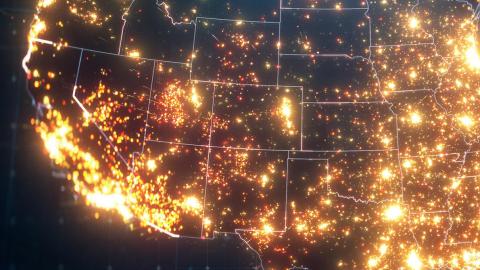
Collaborating with utilities to analyze power outage impacts, Berkeley Lab researchers have developed publicly available tools that inform billions in new utility investments, driving grid resilience nationwide.

To help assess reconductoring projects, researchers at Lawrence Berkeley National Laboratory (Berkeley Lab) have developed the Reconductoring Economic and Financial Analysis (REFA) tool.