The Challenge
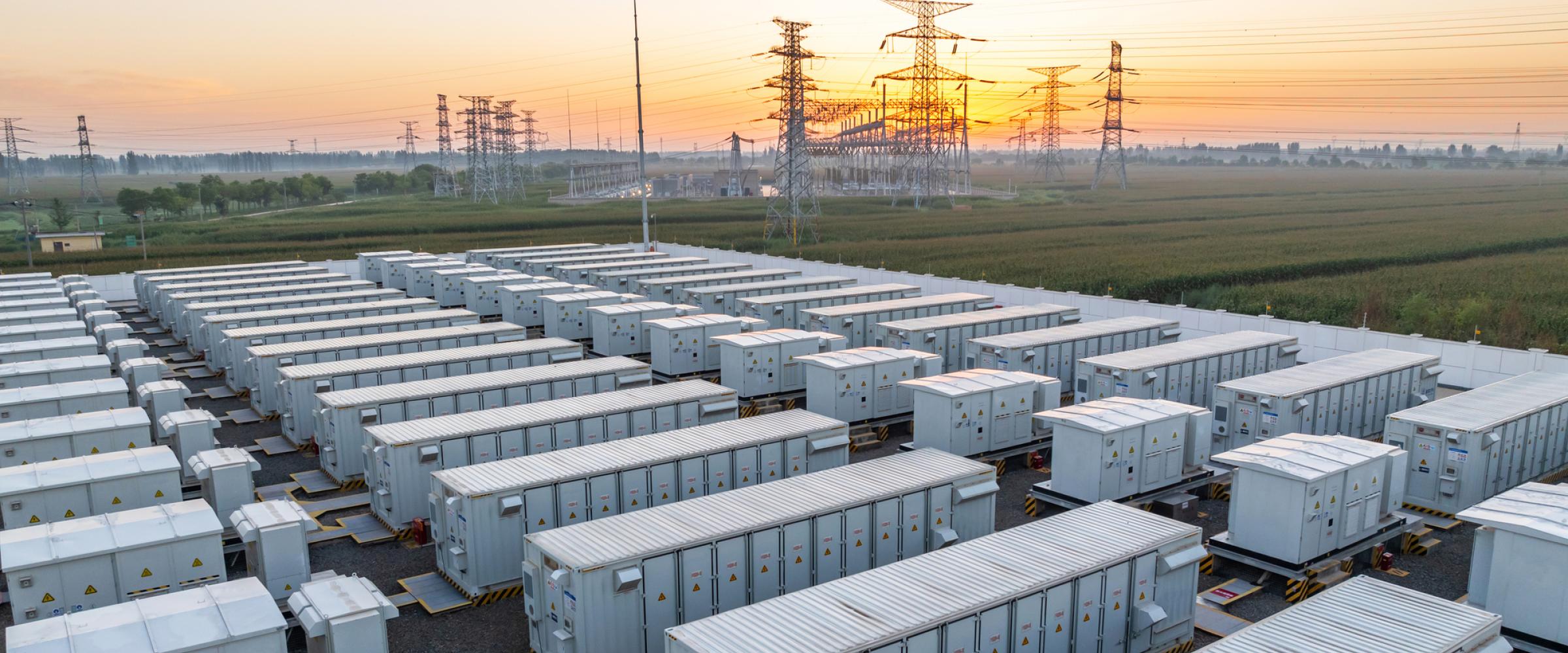
To integrate more diverse energy sources, we need flexible ways to store excess power and move it across time and location. This would reduce the total capacity required to meet peak demand. New energy storage solutions are needed to address these issues.
How are we making a difference?
By carrying out early-stage research and rapid technology validation, the Energy Technologies Area (ETA) is working to accelerate the industry’s ability to adopt and commercialize new innovative energy storage technologies. Our researchers combine long-standing expertise in developing novel chemical, electrochemical, and thermal technologies with policy analysis that can demonstrate the economic use case for these new technologies to relevant stakeholders. At ETA, we work closely with academic, government and industry partners to conduct foundational and applied research that provides the groundwork for the development of transformative new energy storage technologies.
The importance of electrochemical energy storage has grown substantially over the past decades as the integration of alternative energy sources moves into widespread implementation. New electrochemical storage systems have to be designed to meet demand for a variety of applications and cycle regimes in the existing and future transportation and grid infrastructure.
Cathode Materials
ETA’s strength in synthesis, characterization, and testing offers an opportunity to create new cathode materials that match or exceed the energy density of current Li-ion cathodes but can be produced from less constrained transition metals such as iron, manganese, vanadium, titanium, or molybdenum.
Disordered Rocksalts with Li-eXcess (DRX) materials present a unique opportunity to address both the cost and the resource limitations related to Li-ion battery technology, without sacrificing energy content. Their chemical similarity to current transition metal oxide-based cathodes make them nearly a drop-in replacement for current Li-ion cathodes, mitigating any significant cell and production- line reengineering, as is required for “beyond Li-ion” technologies.
All-Solid-State Batteries
All-solid-state batteries are regarded as one of the future’s most promising energy storage technologies. However, despite their many promising benefits, they still face significant challenges. Berkeley Lab and ETA researchers are addressing these research and development needs.
To advance the capabilities of all-solid-state batteries, ETA is collaborating with the Energy Sciences Area to improve: (1) the fundamental understanding of the function and operation of the battery electrodes, electrolytes, and their interphases and interfaces; (2) solid-state-electrolytes with high ionic conductivity, chemical and mechanical stability, and ease of manufacturing; and (3) new scalable design and architectures of the battery’s passive and active components.
The combination of materials discovery, synthesis, advanced characterization, and device nano-engineering approaches at Berkeley Lab’s user facilities — the National Energy Research Supercomputing Center (NERSC), Advanced Light Source, and Molecular Foundry — show great promise toward overcoming science and technology obstacles, which can lead to technological breakthroughs and improvements in materials and cell-level performance.
Chemical Storage
Chemical energy storage includes hydrogen and other hydrogen-rich chemical energy carriers produced from diverse energy sources. Chemical storage enables high energy density, long-duration/seasonal storage, and the ability to address not only the power sector but industrial and transportation sectors as well. A major challenge for currently utilized and prospective chemical energy storage systems is cost competitiveness with other energy storage media, and ETA researchers are working to find solutions.
Electrolyzers
ETA researchers recently developed a unitized reversible fuel cell (URFC) that can boost round-trip efficiencies by combining the electrolyzer and fuel cell into a single device. The unconventional configuration explored involved both electrodes each participating in reacting both hydrogen and oxygen, an approach verified by laboratory experiments, techno-economic analysis, and accelerated stress testing.
Thermal Energy Storage
Thermal energy storage systems can convert electrical energy to heat and store it with ~98% net efficiency, making it a particularly attractive option for cases in which the end use is thermal. ETA researchers are exploring various routes to optimize thermal energy storage materials and designs, such as creating thermochemical materials that undergo solid-gas reversible chemical reactions with water vapor or developing a composite material capable of converting excess electricity into heat and storing it.
High-temperature Thermal Energy Storage Systems
To provide cost-competitive thermal energy storage solutions, researchers are developing a composite material capable of converting excess electricity into heat and storing it at temperatures in excess of 2,000°C, from which it can be dispatched up to 100 hours later when demand peaks. The high-grade thermal energy can then be converted back into electricity for the grid, or supplied directly as process heat to industrial manufacturing processes.
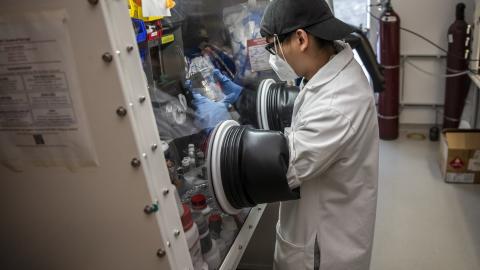
Our researchers have made significant progress in developing battery cathodes with a novel family of materials known as DRX, which stands for disordered rocksalts with excess lithium.

Berkeley Lab researchers identify minimum temperature to cost-effectively generate electricity from waste heat

New Berkeley Lab research opens up a potential low-cost, safe alternative in manganese, the fifth most abundant metal in the Earth’s crust.