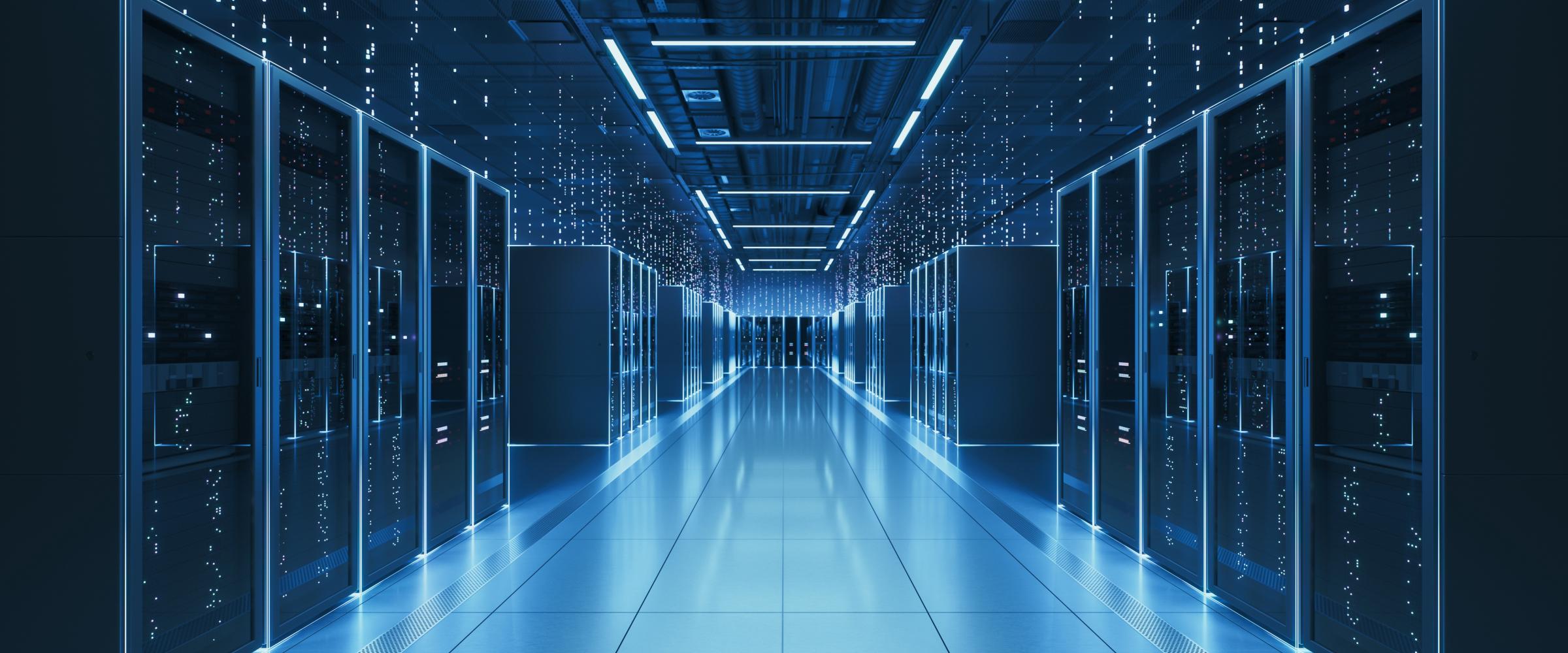
The Challenge
Data centers have emerged as a cornerstone of the U.S. economy, providing the computing power essential for modern technologies and artificial intelligence. The recent rapid expansion of these facilities has triggered a substantial increase in resource consumption, specifically the electricity needed to operate high-performance processors and their cooling systems.
How are we making a difference?
The Energy Technologies Area (ETA) leads research addressing the challenges of this rapid growth, performing groundbreaking analyses and collaborating with industry leaders—including major AI firms, utilities, and grid operators—to secure the reliable supply of energy required by modern facilities. Through the development of new technologies, system designs, and operational strategies, ETA's comprehensive approach addresses data centers at multiple scales highlighted below.
National, State, and Local Impact
At the national, state, and local levels, ETA researchers partner with key stakeholders to establish best practices for load forecasting and grid integration.
Load Forecasting
ETA researchers developed a detailed “bottom-up” model to estimate total on-site electricity and water demand across data centers in the U.S. and have released several reports providing estimates back to calendar year 2000. The 2024 edition of the United States Data Center Energy Usage Report provides a comprehensive picture of electricity and water needs for data centers including a scenario range of future demand out to 2028 based on new trends and the most recent available data.
Grid Planning, Procurement & Operations
ETA researchers identify actionable strategies for states, utilities, and regulators to accelerate large-load interconnection, and provide near-term insights on scale and location of large-loads entering interconnection queues to inform grid planning, tariffs, and cost allocation.
Load Flexibility
ETA researchers are playing a central role in developing demand flexibility solutions for data center operations at the national, state, and local levels. In 2024, LBNL hosted the DOE Data Center Load Flexibility Workshop on behalf of the DOE to bring together key stakeholders, including data center owners, operators, and developers, participants from electric utilities and regulators, as well as industry stakeholders, and researchers. Building on the insights from the workshop, ETA researchers are now playing a central role in developing and demonstrating demand flexibility solutions for data center operations. Under the REFLEX program we are working with several industry partners to demonstrate data center load flexibility enabled through optimized controls, workload management, and integration of storage.
Facility, Component, and Microchip Performance
ETA researchers focus on improved energy performance and innovation through research, development, and demonstration (RD&D) for advanced power and cooling technologies. We conduct studies on component-level impacts, and waste heat reuse, and offer training programs to improve operations at individual facilities.
Power, Cooling & Computational Technologies
ETA’s research focuses on optimizing technologies and operational practices, including advanced cooling, monitoring and controls, air and liquid cooling management, and water usage. By working with industry partners, the Lab accelerates the deployment of innovative solutions that lower energy and resource consumption while maintaining performance and reliability. The Data Center Cooling Collaborative (DC Cool), funded by DOE's Office of Critical Minerals and Energy Innovation, will form a data center cooling testbed network with private and public sector partners to advance a variety of cooling technologies that reduce data center load on the grid. In addition to research, the Lab provides training and certification programs (e.g., Data Center Energy Practitioner), webinars, and workshops to share knowledge and best practices with operators, utilities, and policymakers.
Performance Modeling & Simulation
Hyperscalers use ETA’s computational tools, such as the Modelica Buildings Library, to design and simulate the operational performance of data centers. Digital twin tools such as Modelica are used to de-risk new energy systems, and to develop new control approaches that pro-actively adjust operation to maximize uptime. ETA researchers are also partnering with a team led by the University of Maryland to develop a data center modeling tool, MOSTCOOL (Multi-Objective Simulation Tool for Cooling Optimization and Operational Longevity), under the ARPA-E COOLERCHIPS program. MOSTCOOL is a simulation software tool set that can be used to optimize the design of data centers, including power and thermal management systems for lower cooling energy demand and lower cost, while maintaining high reliability and availability.
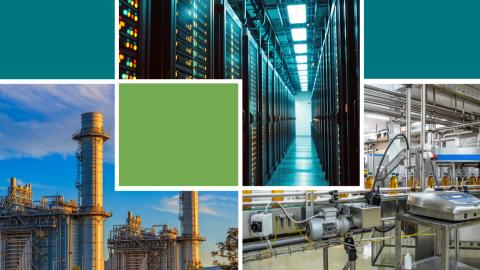
Three projects led by Lawrence Berkeley National Laboratory (Berkeley Lab) are among those selected as part of a $155 million Department of Energy (DOE) investment in American industrial innovation. Spanning load flexibility, data center cooling, and food processing, the projects capitalize on the Lab’s expertise in developing and testing leading-edge technologies to boost American productivity and competitiveness.
Lawrence Berkeley National Laboratory (Berkeley Lab) has been at the forefront of research on this evolution, conducting pioneering analysis and partnering with industry — from top AI companies to utilities and grid operators — to help ensure the reliable, around-the-clock supply of energy and cooling that modern data centers demand.
A recent report produced by the Department of Energy’s Lawrence Berkeley National Laboratory (Berkeley Lab), which outlines the energy use of data centers from 2014 to 2028, estimates that data center load growth has tripled over the past decade and is projected to double or triple by 2028.